
Before Glaucoma Leads to Surgery or Eye Injections, There’s Something You Should Know
Before glaucoma worsens to surgery or constant eye injections, a Harvard Ophthalmology discovery reveals a simple 10-second morning routine — regardless of age or pre-existing conditions.
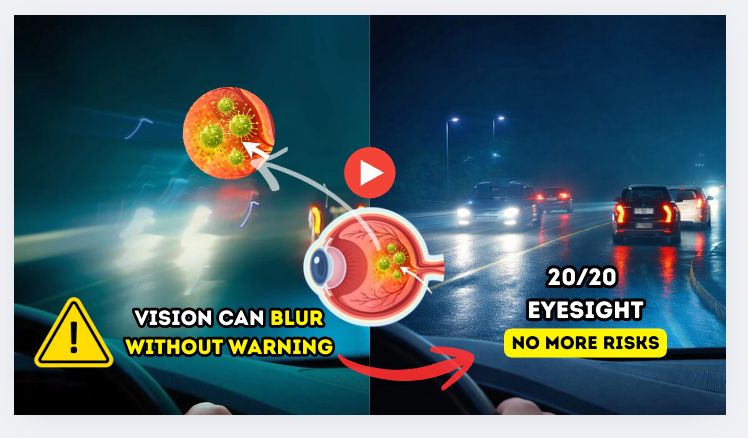
Imagine driving on the highway when your vision suddenly fades.
One moment everything looks normal.The next, the road blurs. Lights streak. Shapes soften. And for a split second, you panic.
For many people living with glaucoma, this isn’t just imagination — it’s a real risk that often comes without warning.
Most assume glaucoma only gets worse slowly.That as long as they’re wearing glasses, using drops, or “keeping an eye on it,” they’re safe.
But new findings suggest that glaucoma doesn’t always follow a predictable path.
In fact, researchers are now warning that sudden vision changes can happen long before surgery or constant eye injections are ever discussed.
The Hidden Risk Most People With Glaucoma Aren’t Told About
Glaucoma isn’t just about eye pressure or aging.And it isn’t something that only threatens your vision years down the road.
Emerging research indicates that glaucoma may involve silent internal damage that builds quietly — until one day, vision changes seem to appear out of nowhere.
• Blurry vision.
• Difficulty focusing.
• Glare at night.
• Trouble judging distance.
Many people dismiss these early signs as fatigue, stress, or “just getting older.”
But specialists now believe these may be early warning signals, not harmless annoyances.
And ignoring them could mean waiting until the only options left are surgery or frequent intraocular injections.
Why Traditional Approaches Often Miss the Bigger Picture
Most standard glaucoma care focuses on managing symptoms — not understanding why vision continues to decline in the first place.
• Eye drops.
• Stronger prescriptions.
• Monitoring pressure.
Yet many patients still report:
• Vision worsening even with glasses.
• Ongoing blur or distortion.
• A constant fear of what comes next.
That’s because if glaucoma involves deeper biological stress inside the eye, surface-level approaches may never fully address what’s happening.
Which explains why so many people quietly think: “I’m doing everything they told me… so why does my vision still feel unstable?”
A New Discovery From Harvard Ophthalmology
This question led researchers from Harvard’s Department of Ophthalmology to take a closer look at what may really be driving vision decline in glaucoma. What they uncovered surprised even seasoned specialists.
Their work points to a previously overlooked process inside the eye — one that may help explain why glaucoma can worsen unpredictably, regardless of age or diagnosis.
Even more surprising? They found that supporting this process didn’t involve surgery, injections, or complex treatments.
Instead, it centered around a simple 10-second morning routine, studied over the course of one month.
Not a cure.Not a miracle.But a new biological insight that’s changing how researchers think about glaucoma progression.
• Not a bizarre unsafe cure.
• Not a miracle.
• But a new biological insight that’s changing how researchers think about glaucoma progression.
The Next Step
This discovery was first shared as part of a special report — and it’s now available to watch online.
In this short, eye-opening video, you’ll learn:
• What most people with glaucoma are never told about the real risk of vision loss
• Why vision can change suddenly, even when you think you’re “managing” glaucoma
• How a simple daily insight may support eye health before more aggressive interventions are needed
If you or someone you love has glaucoma, this information may change how you think about what comes next.
This post is no longer receiving comments!
Woke up today and realized I didn’t reach for my glasses first. That hasn’t happened in 15 years. I am so grateful.